Love Your Brain by Taking Good Care of It
by Kevin Y. Kawamoto, MSW, Ph.D.
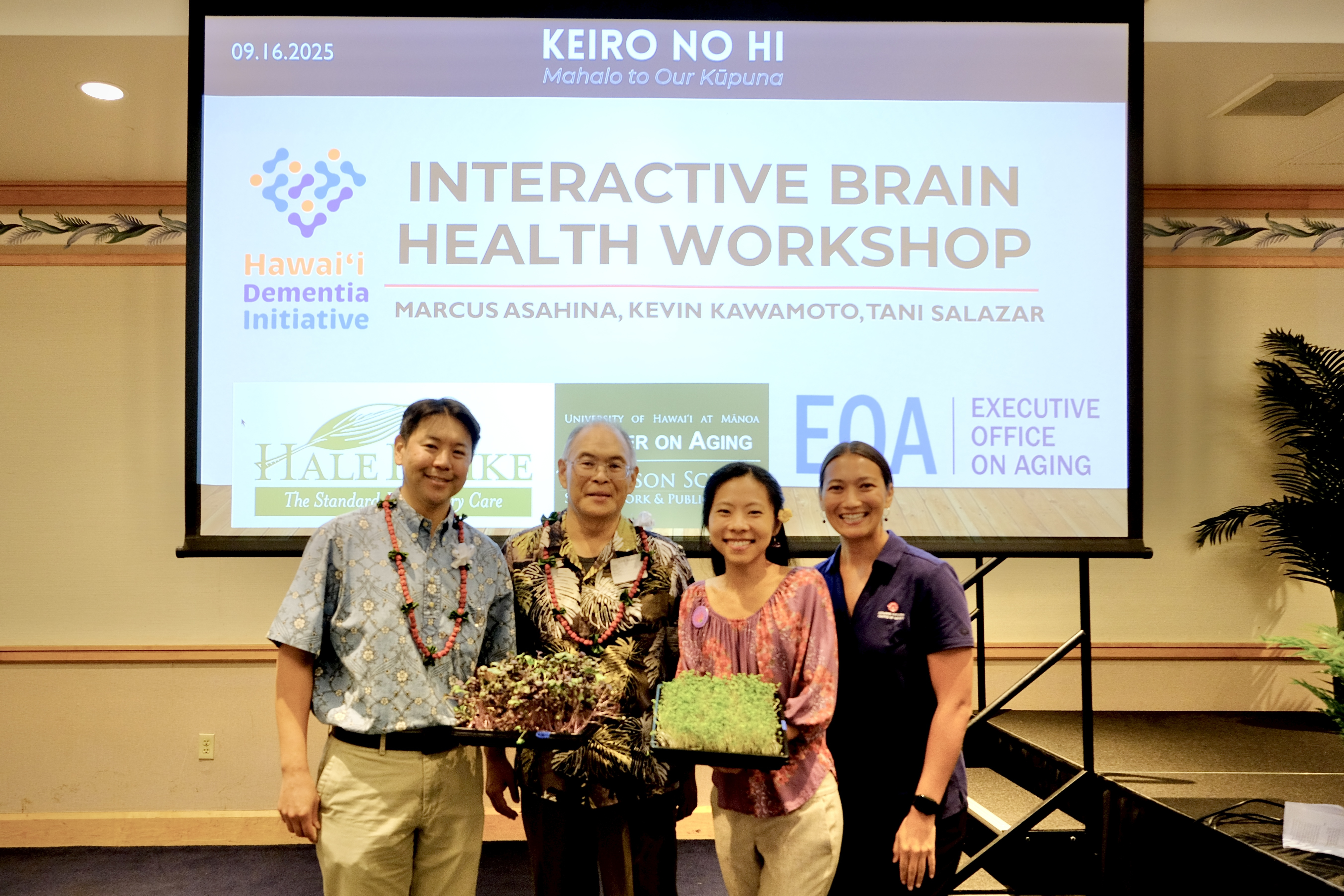
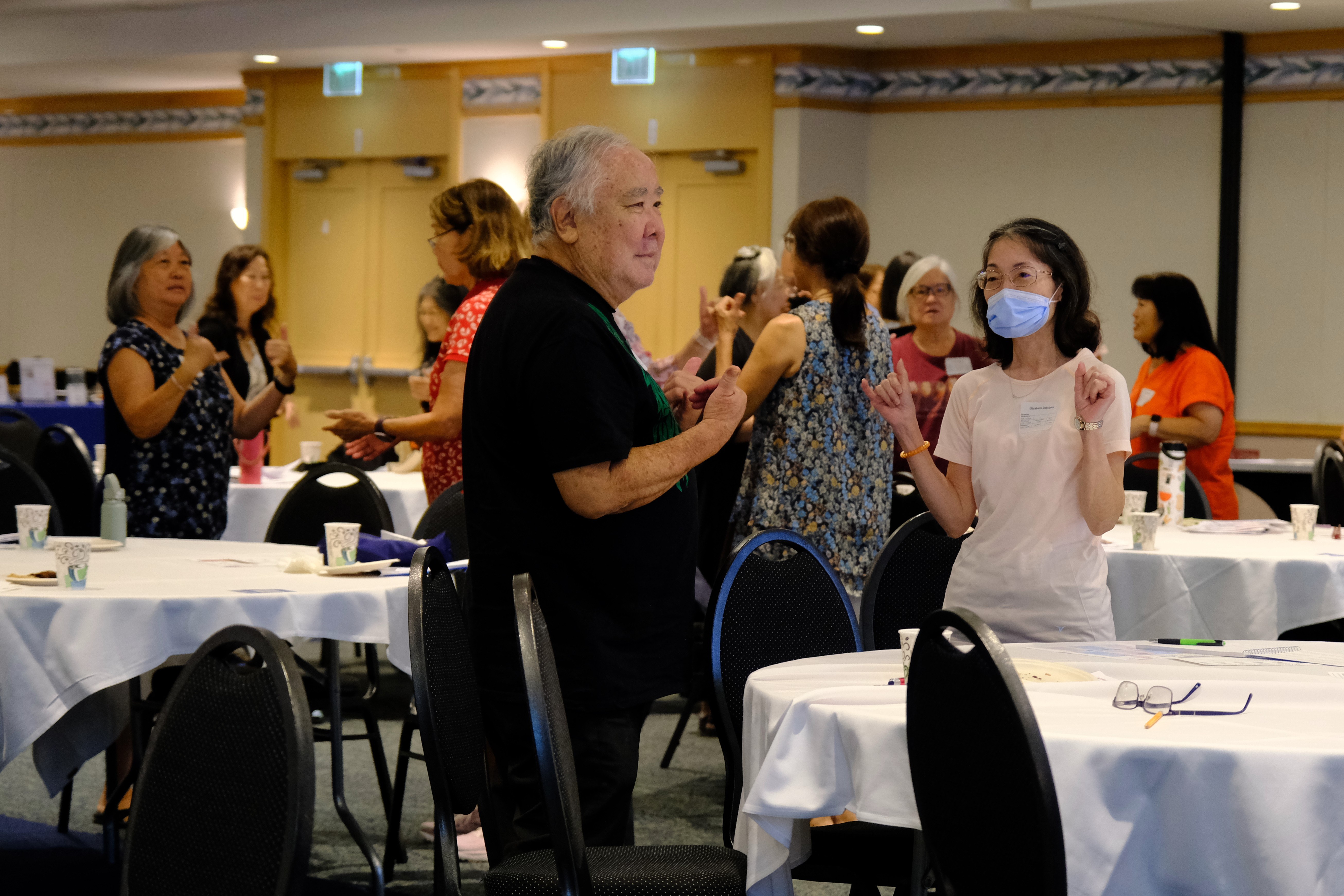
Last September, the state’s Executive Office on Aging teamed up with the University of Hawai‘i’s Center on Aging and Hale Kuʻike, a memory care residential community, to offer an Interactive Brain Health Workshop at the JCCH’s Keiro no Hi – Mahalo to Our Kūpuna event. Participants learned how to keep their brains as healthy as possible, for as long as possible. This wasn’t a straight lecture kind of presentation. Participants were invited to join presenters Marcus Asahina, Tani Salazar, and Kevin Kawamoto in a variety of culturally-tailored, interactive brain-stimulating activities.
The average adult human brain weighs about three pounds, but it has a big job to do. The brain is like the command central of the entire body. It interprets information that we encounter through our five senses. It initiates movement, affects our behaviors, and enables us to think, remember, plan, communicate, concentrate, and regulate our emotions and bodily functions – and so much more. Most of us don’t give much thought to our brains until something starts to go wrong, like memory problems or difficulty communicating.
Keeping the brain as healthy as possible for as long as possible should be a goal of all people as they age. Brain researchers recommend a number of ways to maintain healthy brains, such as being social, managing stress, getting enough sleep, eating nutritious foods, engaging in physical activity, and routinely keeping the brain challenged. Although genetics can play a role in chronic disease, medical researchers and public health educators emphasize the importance of lifestyle factors, which are modifiable or changeable. For example, a diet high in saturated fats, ultra-processed foods, salty and sugary foods can be changed to one higher in fresh whole foods with lower added salt or sugar.
Because heart disease is the leading cause of death in the United States, much has been written elsewhere about how to keep the heart healthy. Keep in mind that those same recommendations also help keep the brain healthy. In addition to the things already mentioned above, here are a few more: Stop tobacco use. Maintain a healthy weight. Get regular health screenings. Take steps to prevent infection.
Lifestyle changes can be enjoyable if you make it. Volunteering at a community organization, for example, is a great way to stay social, engage in physical activity, and keep the brain active. Modify ingredients in recipes to make them healthier presents a creative challenge that can be fun. And discovering additional ways to lower stress such as listening to relaxing music, experimenting with aromatherapy, and gardening can provide healthy outlets that are not only enjoyable but sustainable, meaning it’s not just a one-time thing but an activity that can be sustained over time.
Interactive brain games and challenges in newspapers, magazines, smartphones and on the computer can keep your brain cells busy. These brain activities should be challenging, varied, and learned to a high degree of proficiency. Or make up your own brain-challenging activities such as studying kanji, gradually increasing the difficulty of the characters, or making origami, gradually increasing the difficulty of the design or folds. Join a group of people who enjoy board games or hanafuda and mah jong. Build something from scratch. Write poetry or your memoirs. Activities to activate your brain cells are limited only by your imagination.
Finally, protect your brain. Check your home and property for tripping hazards. Avoid toxic substances and people. Discuss any concerns you have about your health with a qualified healthcare provider. Love your brain and take good care of it!