| Word | Explanation | Example |
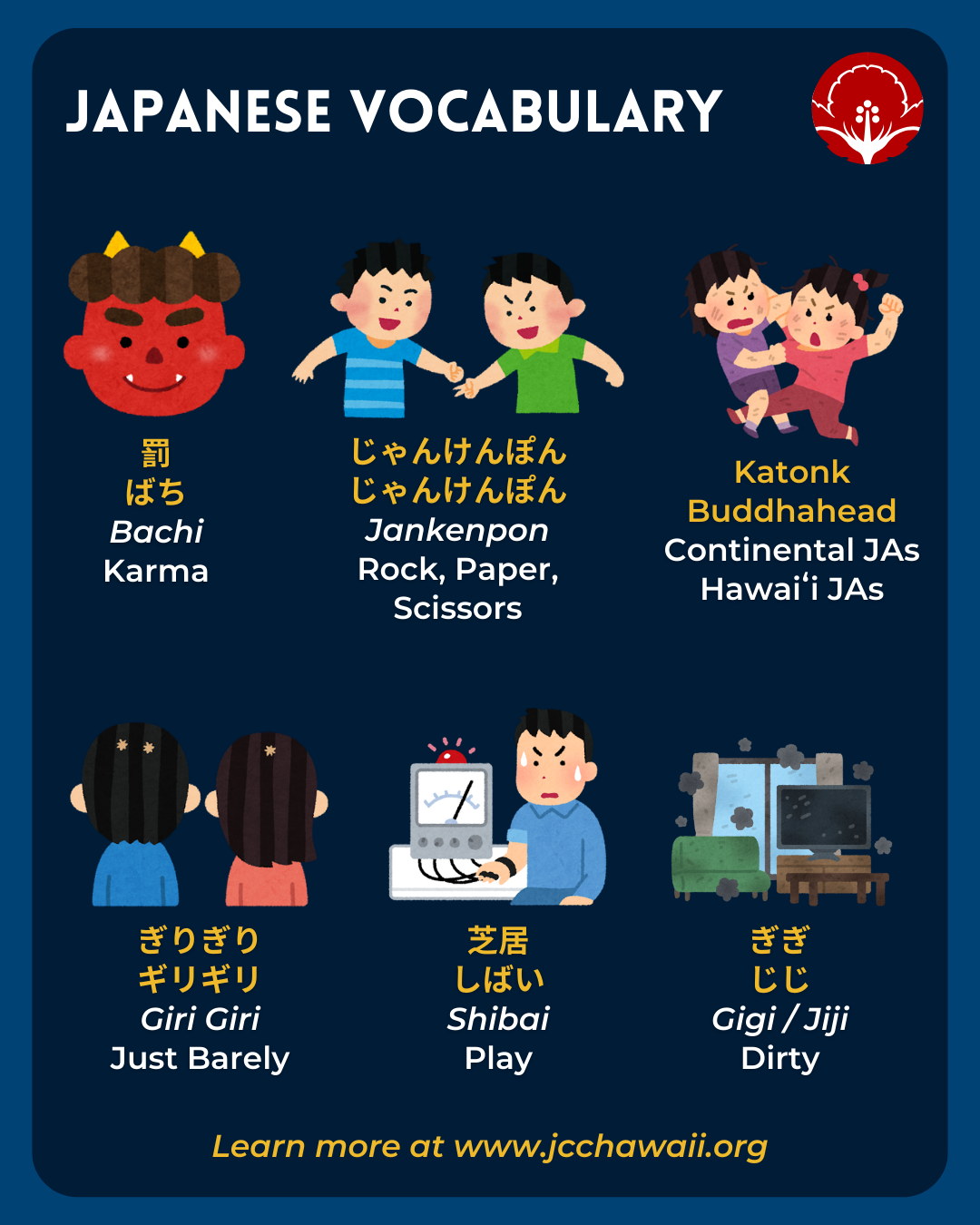
| Bachi (karma) | In Japanese, bachi ばち means (divine) punishment, curse, or retribution. Due to its popularity, it has been adapted into Hawaiʻi Pidgin. | “Betta watch out, you gonna get bachi.” |
| Jankenpon (rock, paper, scissors) | Jankenpon じゃんけんぽん is used to settle disagreements or determine the order of things. In Japan, you’d say, “saishowaguu, jankenpon, aikodesho” when playing. This game, brought to Hawaiʻi by Japanese plantation workers, evolved into multiple pidgin variations such as “jankenpo, ai kara sho (I can show)” and “jankenna, mankenna, saka saka po.” How did you grow up saying it? | “Jus jankenpo already!” |
| Katonk (Continental JAs) / Buddhahead (Hawaiʻi JAs) | Katonk (Continental Japanese American) and Buddhahead (Hawaiʻi Japanese American) are terms originating from conflicts within Japanese American military units during WWII. | “We’re the katonk cousins.” “This haircut makes me look like a buddhahead.” |
| Giri Giri (just barely) | In Hawaiʻi Pidgin, the cowlick / swirly spot in someone’s hair is called giri giri. As an onomatopoeic Japanese word, it can mean “just barely or at the very limit.” In Hawaiʻi, this word comes from western Japan dialects, where the standard word used to refer to a hair whorl (crown) is tsumuji. | “Eh, your son get three giri giri!” |
| Shibai (play) | In Japanese, shibai しばい refers to a play or drama. Hawaiʻi Pidgin exaggerates its meaning to refer to something determined as an act. When used locally, it’s like you are describing something as lies or hypocritical nonsense. | “That commercial one big shibai, the product no work like that!” |
| Gigi / Jiji (dirty) | In Hawaiʻi Pidgin, you’d use the word gigi to call something dirty. It’s generally believed to have indirectly originated from the Japanese language, but it’s not the standard Japanese word for dirty. In Japanese slang, jiji ジジ is a derogatory reference to an old man. | “No touch, that stay gigi.” |